

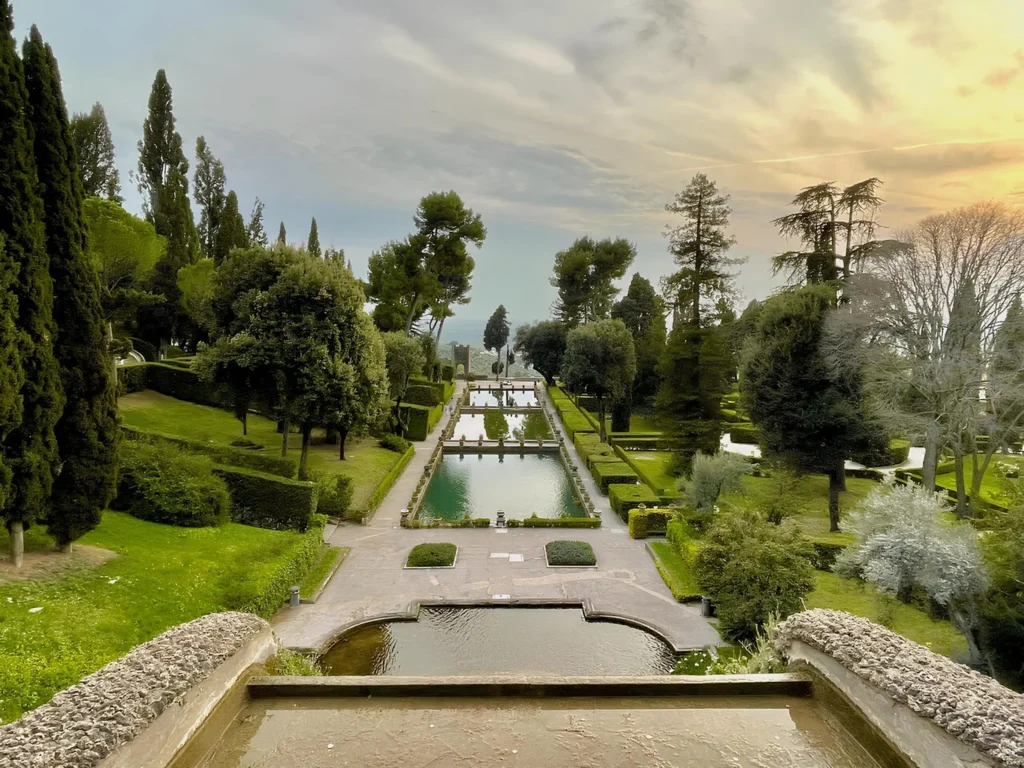
Villa D'Este. Tivoli, Italy
Our visit to Villa d’Este offered a powerful reminder of how structure, water, and movement can shape an emotional landscape. Walking through its terraced gardens, we were struck by the precision of axial design and the deliberate choreography of fountains guiding the eye and body. Water here is not ornamental alone, but architectural—used to frame views, mark transitions, and create rhythm. The interplay between symmetry and surprise felt especially relevant to our work, reinforcing the importance of balance within formal systems. Stone, cypress, and sound worked together to create moments of grandeur softened by time. Villa d’Este demonstrated how gardens can be both authoritative and inviting. It reminded us that Renaissance design is not static, but experiential. This visit continues to inform how we think about proportion, procession, and the lasting power of thoughtful restraint.
Kenrokuen Garden. Kanazawa, Japan
Our time in Kenrokuen offered a quieter, yet equally profound source of inspiration. Often described as one of Japan’s most celebrated gardens, Kenrokuen revealed itself through subtlety rather than spectacle. Each path unfolded slowly, encouraging pause and awareness of shifting perspectives. We were deeply influenced by the garden’s use of asymmetry and borrowed scenery, where distant mountains feel intentionally woven into the design. Seasonal awareness was everywhere—from pruned pines to carefully placed stones that anticipate snow, rain, and time. Kenrokuen reinforced the idea that gardens need not dominate their surroundings to be powerful. Instead, they can guide attention through absence as much as presence. The experience affirmed our belief in gardens as living compositions—designed to evolve, not to overwhelm.